
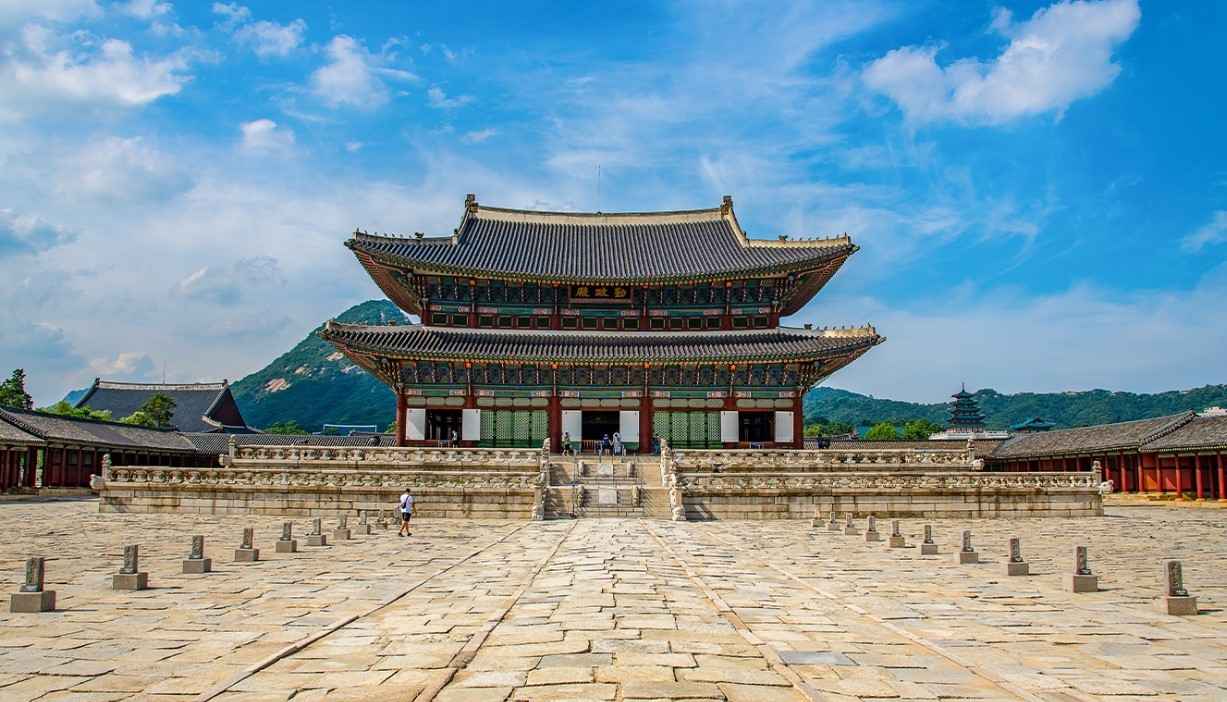
Amid recent headlines about an Indonesian traveler reported missing from a tour group in South Korea, Gyeongbokgung Palace has also found itself in the spotlight. As the largest surviving palace from the Joseon Dynasty, it’s one of Seoul’s most iconic landmarks and a near-permanent fixture on tourist itineraries.
The Indonesian traveler involved in the incident, identified as Femas (22), had joined an open trip organized by Berani Backpacker.
According to Berani Backpacker’s Marketing Manager, Wiky, the group departed from Jakarta on June 27, 2026. On the tour’s first night, June 28, 2026, all participants were given free time after the scheduled itinerary wrapped up.
In one of the photos shared online, Femas is seen posing with Gyeongbokgung Palace in the background one of Seoul’s most iconic destinations and a regular stop on South Korea travel itineraries.
The palace is also a popular spot for photos in traditional hanbok attire, set against its striking traditional Korean architecture. But beneath its grandeur lies a long and layered history, along with plenty of fascinating facts.
1. The Name “Gyeongbokgung” Means “Palace of Great Blessings”
Gyeongbokgung Palace was built in 1395 by King Taejo, founder of the Joseon Dynasty. It served as the dynasty’s main palace and the center of royal government.
The name Gyeongbokgung carries deep meaning, generally translated as “the palace greatly blessed by heaven,” or a place meant to bring prosperity and good fortune.
This name reflected the high hopes held for the newly established kingdom. Gyeongbokgung went on to become the center of governance and a symbol of the Joseon Dynasty’s power.
2. The Largest of Seoul’s Five Grand Palaces
Gyeongbokgung Palace is the largest among the five main palaces of the Joseon Dynasty in Seoul. The complex spans a vast area, featuring numerous buildings, pavilions, courtyards, and gardens.
Because of its location in the northern part of the old capital, Gyeongbokgung is also known as the “Northern Palace.”
3. A History Marked by Tragedy
Much of the Gyeongbokgung Palace that stands today is the result of modern reconstruction. The original palace was completely destroyed by fire in 1592 during the Imjin War, when Japan invaded Korea.
At the time, the kingdom’s finances were severely depleted, leading the royal government to abandon the ruins of Gyeongbokgung and relocate governance to Changdeokgung Palace. Gyeongbokgung remained abandoned for nearly three centuries before finally being rebuilt in 1867.
But the palace’s dark history didn’t end there. In 1895, Empress Myeongseong was assassinated within the Geoncheonggung area of the Gyeongbokgung complex, an event now known as the Eulmi Incident — one of the darkest tragedies in modern Korean history.
Gyeongbokgung later suffered further damage during the Japanese occupation. As a result, much of the complex seen today is the product of gradual reconstruction and restoration efforts over the years.
4. Built Without a Single Nail
One of Gyeongbokgung’s most iconic structures is Gyeonghoeru Pavilion, once used for royal banquets, grand celebrations, and receiving foreign envoys. The pavilion stands over a large artificial pond, supported by 48 stone pillars.
Its design carries deep philosophical meaning. The outer pillars are square, symbolizing the earth, while the inner pillars are round, symbolizing the heavens. The building’s layout was also designed based on ancient philosophical calculations and principles from the I Ching, or Book of Changes.
Even more remarkable, the main wooden structures throughout Gyeongbokgung were built entirely without nails. Architects relied on a traditional wood-joinery system called Gurae-jjeim, using interlocking brackets, joints, and wooden pegs a technique that showcases the sophistication of traditional Korean craftsmanship.
This nail-free construction also gave the buildings greater flexibility, allowing them to shift slightly and absorb the impact of earthquakes or strong winds without easily collapsing.
5. The Uneven Stone Floors Were Designed That Way
The stone courtyard in front of Gyeongbokgung’s throne hall might look rough, uneven, and irregular at first glance, but this wasn’t the result of poor construction. The granite stones in this area were intentionally left unpolished.
Their rough surface helps reduce sunlight glare, preventing it from blinding royal officials standing in the open courtyard. The texture and slight incline also serve another purpose: when it rains, water drains more quickly, keeping the surface from becoming too slippery.
So behind Gyeongbokgung Palace’s beauty lies a long history and architectural sophistication that isn’t always obvious at first glance. This palace isn’t just a destination for photos — every corner holds a story, from the glory of the Joseon Dynasty and the devastation of war to the long restoration process that turned Gyeongbokgung back into one of South Korea’s most treasured landmarks.